
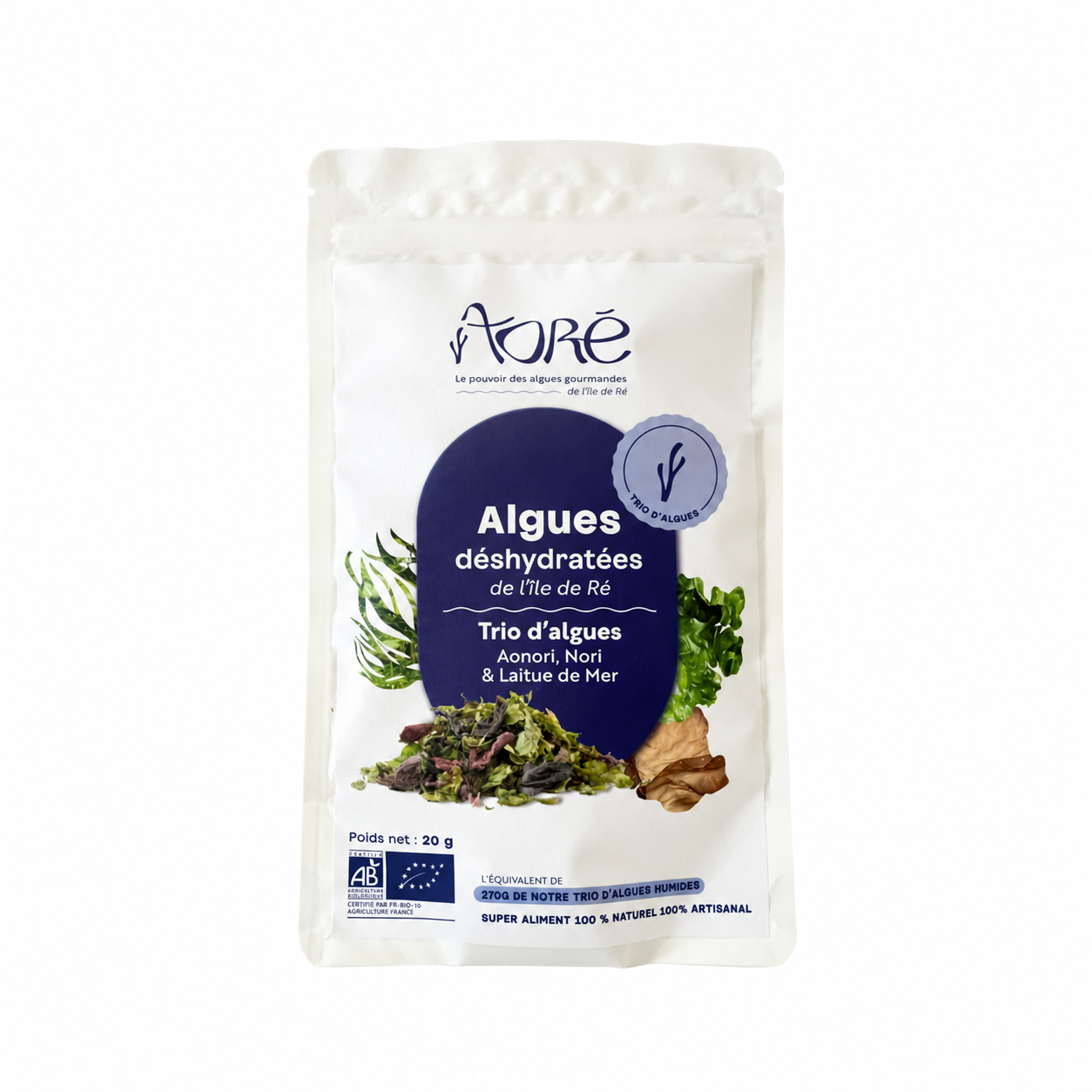
Description
Three Types of Seaweed to Discover
Aonori
A green seaweed with vegetal and parsley-like notes that adds an aromatic touch to the blend.
Nori
A red seaweed, best known for its use in maki rolls, which adds a rich, oceanic flavor to this trio.
Sea lettuce (
)
A green seaweed with broad leaves resembling lettuce, which adds a vegetal and oceanic note to the blend.
The Nutritional Benefits of Seaweed
Aonori, nori, and sea lettuce have a varied nutritional profile: fiber, protein, minerals, and trace elements, including iodine, magnesium, calcium, potassium, iron, and zinc. They also contain beta-carotene and several vitamins, including vitamins C, E, and B vitamins.
Directions for Use
The seaweed flakes rehydrate when they come into contact with moist foods and are as easy to use as fresh herbs. Stir them into your salad dressings, tartares, sauces, and marinades, or sprinkle them directly onto your plates.
Whether paired with cooked or raw fish, eggs, vegetables, soups, pasta, rice, or other grains, they complement a wide variety of dishes, adding a delicate, ocean-fresh note. They also fit perfectly into vegetarian and plant-based cuisine, and—for the more adventurous—can be incorporated into sweet treats as a subtle accent.
One simple step and a whole range of possibilities for varying your flavors every day, however you like!
The Harvester and Processor
Based in La Flotte, Aoré specializes in harvesting and processing edible seaweed. Hand-harvested along the coast of Île de Ré, the wild seaweed is then processed locally at the company’s facility.
Through its products, Aoré aims to introduce people to the flavors of seaweed and make them accessible for everyday cooking. Dried seaweed, seaweed tartares, and seasonings offer different ways to enjoy them—whether to enhance a recipe or discover new flavor combinations.
A local initiative that highlights coastal resources and encourages people to take a fresh look at these marine plants.
Ingredients: aonori*, nori*, dehydrated sea lettuce*.
*Ingredients from organic farming.
May contain traces of: shellfish, fish, and crustaceans.
Net weight: 20 g.
Nutritional values per 100 g: Energy: 949 kJ / 228 kcal; Fat: 2 g, of which saturated fatty acids: 0.2 g; Carbohydrates: 14.4 g, of which sugars: 0 g; Protein: 20.4 g; Salt: 7.2 g.
Shelf life: 3 years; store in a dry place, away from light.
Quality and Preparation
These organic wild seaweeds are harvested by hand and then processed locally. They are dried at a low temperature—below 40 °C—using solar energy and protected from UV rays to preserve their raw quality.